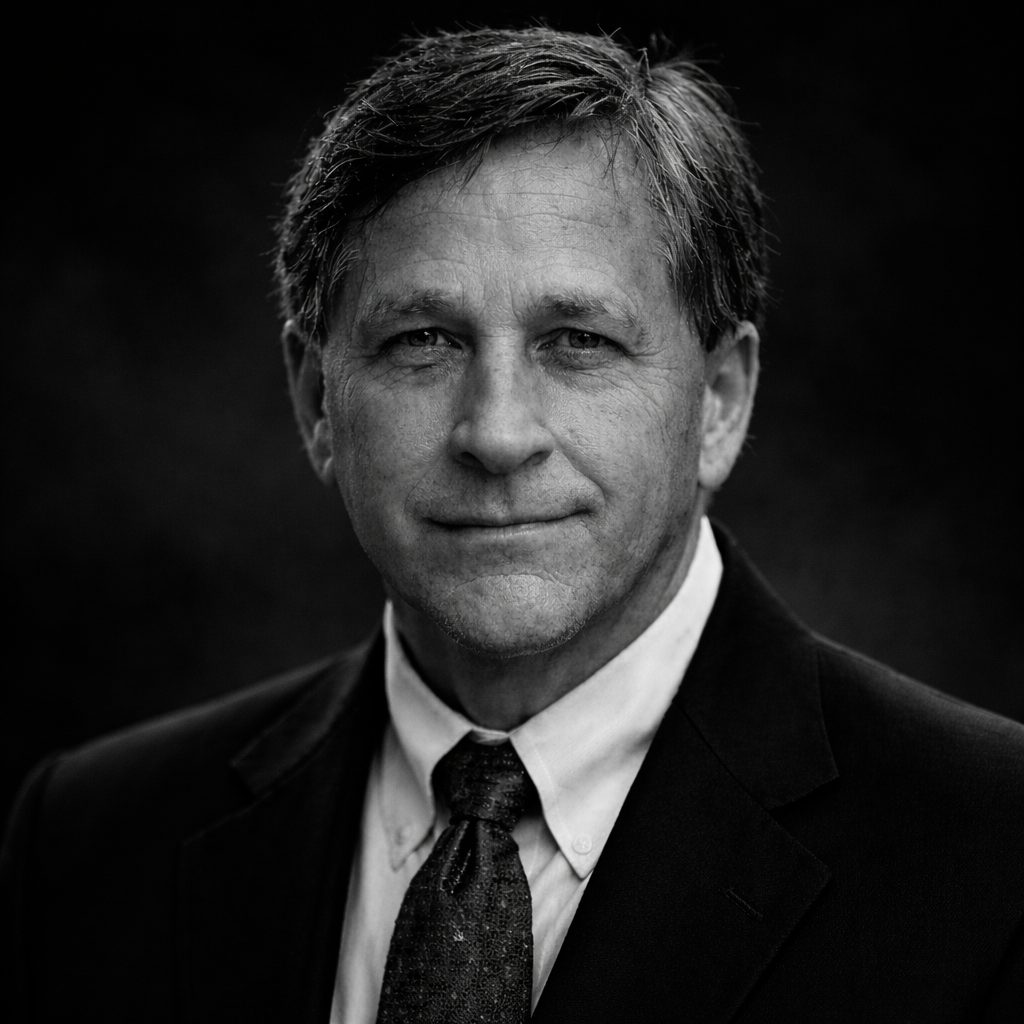
Jerome Powell's term as Federal Reserve Chair ends May 15. Barring an unexpected reversal, his successor will be Kevin Warsh — a former Fed Governor, longtime Trump confidant, and the most controversial nominee to lead the central bank in modern memory. Whatever you think of the politics, the economic moment Warsh inherits is the part that matters for retirees. Let's walk through who he is, why Trump picked him, and what he's actually facing.
Who Is Kevin Warsh?
Kevin Warsh is not a stranger to the Federal Reserve. Born in Albany, New York in 1970, he graduated from Stanford in 1992 and earned his law degree from Harvard in 1995. He spent the early part of his career as a Morgan Stanley executive in mergers and acquisitions, then moved to Washington as a top economic advisor to President George W. Bush.
In 2006, at age 35, he became the youngest-ever Federal Reserve Governor, a role in which he helped steer the institution through the 2008 financial crisis. He worked closely with Chair Ben Bernanke and then-New York Fed President Tim Geithner during the worst weeks of the meltdown — including the negotiations that kept his former employer, Morgan Stanley, alive.
What's relevant for today, though, is how he left. Warsh resigned in March 2011, before his term ended, in protest of the Fed's decision to buy $600 billion in bonds — the program known as quantitative easing — describing it in a Wall Street Journal op-ed as a strategy that should be "limited, circumscribed and subject to regular review." Since then, he has been a fellow at the Hoover Institution, a Stanford Business School lecturer, and a frequent op-ed writer pressing for a smaller Fed balance sheet and a more disciplined approach to monetary policy.
That history matters because the Fed Warsh is about to lead carries a balance sheet many times the size of the one he objected to in 2011.
Why Trump Picked Him
The relationship between Donald Trump and Jerome Powell has been openly hostile for most of Trump's second term. The president campaigned on lower interest rates and spent the better part of a year publicly demanding the Fed deliver them. Powell — appointed by Trump in his first term — declined to oblige, citing inflation that has refused to fall back to the Fed's 2% target.
The pressure escalated dramatically. The Department of Justice launched a criminal investigation into Powell and the Fed, ostensibly focused on cost overruns associated with a multibillion-dollar renovation of the central bank's Washington headquarters. Powell, in a statement revealing the investigation in January, accused the administration of targeting him because of the Fed's decisions on interest rates. The probe was eventually dropped after prosecutors found no evidence of wrongdoing — but only after Senator Thom Tillis threatened to block any Trump Fed nominee until the matter was resolved.
Warsh, meanwhile, has been an unofficial Trump advisor for years. He was passed over for Fed Chair in 2017 in favor of Powell, and was briefly considered for Treasury Secretary in the current administration before that role went to Scott Bessent. He has been waiting in the wings for nearly a decade.
What Trump appears to want is straightforward: a Fed Chair who will cut interest rates. Trump has been explicit that his next pick would be, in his words, someone who believes in lower rates "by a lot." Whether Warsh will deliver on that expectation is a different question — and the one most worth watching.
April 21, 2026 — Senate Banking Committee confirmation hearing
April 29, 2026 — Committee advances nomination 13–11 along party lines
Week of May 11 — Full Senate confirmation vote expected
May 15, 2026 — Powell's term as Chair ends
June 16–17, 2026 — Warsh's first FOMC meeting as Chair
The "Sock Puppet" Question
Warsh's nomination has been mired in concerns about Fed independence — concerns sharpened by the way Trump has spoken about the central bank for the past eighteen months. Senator Elizabeth Warren has repeatedly called Warsh a "sock puppet" for the White House, and every Senate Banking Committee Democrat voted against advancing the nomination.
Warsh, for his part, has tried to head off the criticism. During his confirmation hearing, he said Trump did not ask him to commit to lowering interest rates: "The president never asked me to predetermine, commit, fix, decide on any interest rate decision, in any of our discussions, nor would I ever agree to do so."
Inflation is a choice, and the Fed must take responsibility for it.
— Kevin Warsh, opening statement to the Senate Banking CommitteeSkeptics point to a different track record. In 2009, with unemployment marching toward 10% and headline inflation negative, Warsh delivered a speech warning that Fed policymakers who waited for normalcy to tighten would "almost certainly have waited too long." In 2018, with the economy at full employment and inflation at target, he reversed course and called for an end to any prospect of tightening — after Trump had passed him over for Fed Chair. In November 2025, he published a Wall Street Journal op-ed titled "The Federal Reserve's Broken Leadership," calling on the Fed to cut rates.
Critics argue the pattern is partisan; supporters argue it reflects evolving views in a changing economy. Reasonable people can disagree on the interpretation. What's harder to disagree on is that markets will be reading every Warsh statement closely, looking for signs that monetary policy is being set on its merits rather than on instructions from Pennsylvania Avenue.
What Warsh Is Walking Into
Set aside the politics for a moment. The economic situation Warsh inherits is, by any honest measure, exceptionally difficult. Powell's final FOMC meeting on April 29 produced a divided committee — four dissents, an unusually high number — and a unanimous decision to do nothing.
The Stagflation Dilemma
The Fed has a dual mandate: stable prices and maximum employment. In normal times, those goals point in the same direction. Right now, they don't. Inflation, as measured by the 12-month change in the personal consumption expenditures (PCE) price index, has been persistently above the Fed's 2% target since March 2021. Meanwhile, the labor market is softening — private employers added an average of 46,000 jobs per month through March, a notably slower pace than in prior years.
This is the textbook stagflation trap. Cut rates to support employment, and you risk re-igniting inflation. Hold rates to fight inflation, and you risk pushing the labor market into recession. Powell's Fed has been threading this needle for two years; Warsh inherits the needle.
Tariffs and Energy Shocks
Two external pressures complicate the picture further. Goldman Sachs projects that the current tariff regime will raise inflation by 1 percent between the second half of 2025 and the first half of 2026 relative to its counterfactual path. Tariffs are, by their nature, a one-time price shock — but the duration and breadth of the current regime have raised the question of whether the shock can be looked through, or whether it will become embedded in expectations.
Oil prices, separately, rose more than 76% from late February to early April amid Middle East tensions, pushing the Fed back into a more cautious stance. This is the kind of supply shock that monetary policy can't really fix — but it does directly affect retiree budgets through groceries, fuel, and travel.
The Balance Sheet Question
Warsh has signaled he wants to shrink the Fed's balance sheet. He's also been clear this is a years-long project, not a quick fix. He acknowledged that it took decades to build the balance sheet and that unwinding it will require time, patience, and care, with any changes requiring agreement across the FOMC.
This is worth watching. A meaningfully smaller Fed balance sheet would tighten financial conditions independently of the federal funds rate — and the timing of any such effort matters enormously for bond yields, mortgage rates, and equity valuations.
Independence Under Pressure
There's also a quieter institutional question that may matter more than any single rate decision. Warsh has spoken about a new "Fed/Treasury accord" that he's suggested could govern the Fed's balance sheet, though in ways he has yet to detail. Some former Fed officials have read this as a constructive narrowing of the Fed's mission. Others worry it could open the door for the Treasury to use the Fed's balance sheet to bypass Congress. The details, when they come, will tell us a great deal.
What This Means For Retirees
Here's the honest answer: nobody — including Kevin Warsh — knows exactly what the path forward looks like. But there are a few practical observations worth holding onto.
The Bottom Line
Kevin Warsh is qualified for the job he's about to take. He has Fed experience, market experience, crisis experience, and a defined intellectual framework. He is also taking that job under circumstances no Fed Chair would choose: an inflation problem that won't fully resolve, a labor market that's quietly weakening, an unprecedented level of political pressure on the institution itself, and an oil shock layered on top of a tariff shock.
For retirees and pre-retirees, the right posture isn't panic and isn't complacency. It's the same posture that has served well throughout Powell's tumultuous final year: a portfolio built for sequence-of-returns risk, sufficient liquidity to ride out volatility without selling at the wrong time, and a clear-eyed understanding that the Fed is one variable among many — not the answer to every question.
The Warsh era will not look like the Powell era. How different it looks, and in which direction, is something we'll be watching closely.