When the World’s Chokepoints Become Financial Chokepoints
A blockade is not only a military event. It can become an energy event, a shipping event, an inflation event, and eventually a retirement-portfolio event.
There are moments in history when a single narrow passage of water reveals just how fragile the modern world has become. The Strait of Hormuz is one of those places.
A recent article by Robert Gore, titled Blockade, makes a broader argument about war, empire, leadership, and the danger of refusing to recognize reality. His language is sharp, and some readers may disagree with parts of his political analysis. But underneath the rhetoric is a point investors should not ignore: when global leaders misread reality, markets eventually pay the price.
That is especially true when the issue involves the Strait of Hormuz.
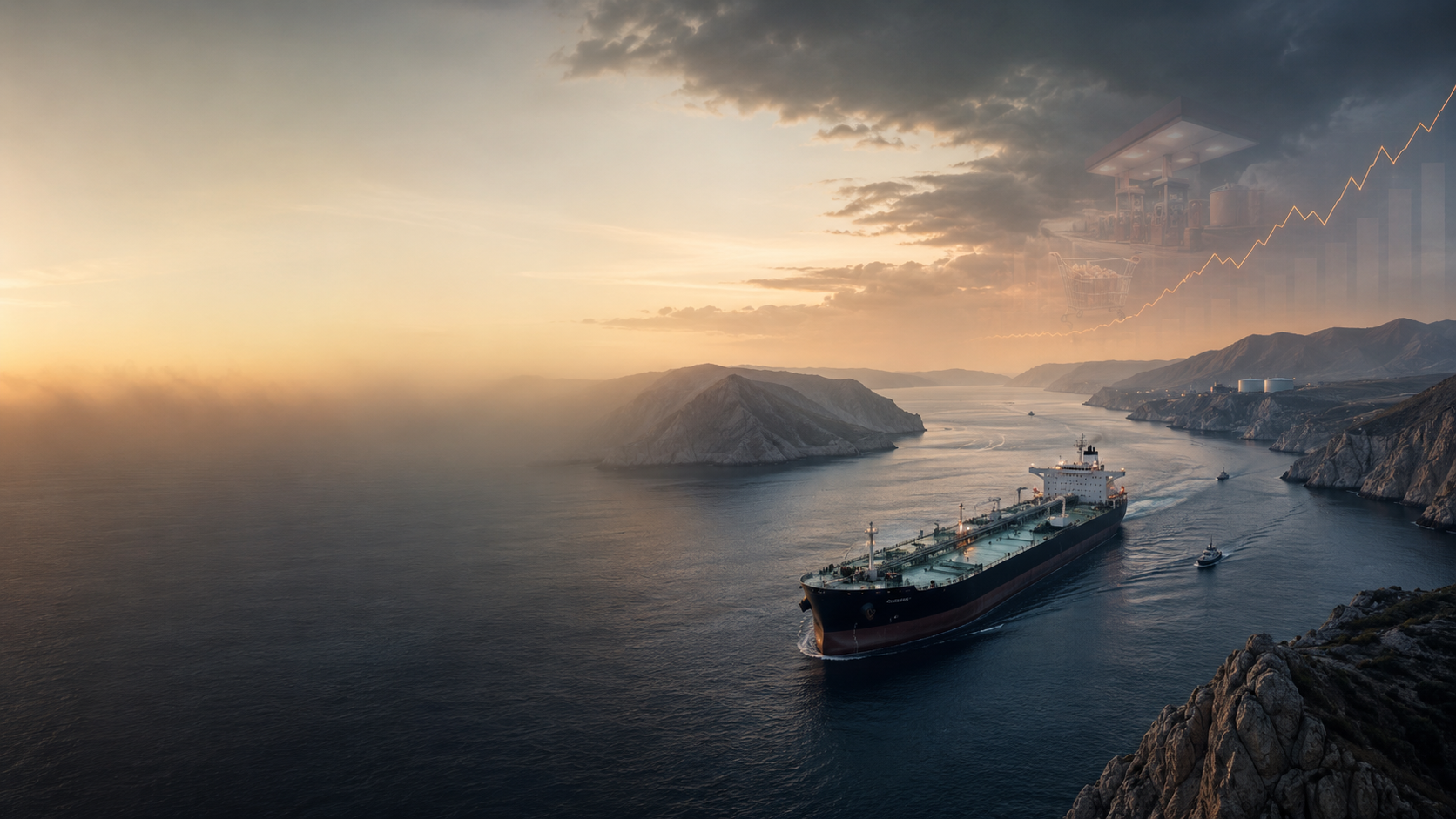
The Strait of Hormuz is not just another waterway. It is one of the most important energy chokepoints in the world. The U.S. Energy Information Administration has described it as one of the world’s most important oil transit chokepoints, with very few practical alternatives if flows are disrupted. The International Energy Agency has also noted that LNG moving through the Strait represents a major share of global LNG trade.
A blockade does not have to remain local. In a highly leveraged world, it can move from the sea lanes to the gas pump, the grocery bill, corporate margins, and retirement accounts.
The market often assumes disruption is temporary
Markets often behave as if disruption is temporary. Stocks may bounce on a headline. Oil may fall on a rumor of negotiations. Investors may assume that the machinery of global trade will quickly return to normal once the immediate crisis appears to calm down.
But shipping does not work like a light switch.
When a major chokepoint becomes unsafe, ships are delayed, rerouted, stranded, repriced, or removed from service altogether. Insurance costs rise. Crews are displaced. Cargo schedules are scrambled. Empty vessels end up in the wrong places. Ports become congested. Companies start competing for limited alternatives. The result is not one clean disruption, but a rolling series of secondary effects.
That is how geopolitical risk becomes embedded inflation.
Inflation is not only a Federal Reserve problem
For years, many investors have been trained to believe that inflation is primarily a Federal Reserve problem. Raise rates, inflation cools. Cut rates, inflation rises.
But in the real world, inflation can also come from broken supply chains, energy insecurity, war-risk premiums, shipping constraints, insurance costs, and geopolitical disorder.
Those forces are much harder for the Federal Reserve to control.
If the price of energy rises because ships cannot safely move through a critical waterway, the Fed cannot print more tankers. If shipping insurance explodes because commercial vessels are at risk, the Fed cannot lower that risk with a press conference. If companies must pay more to move goods, secure inventory, finance delays, or reroute supply chains, those costs eventually move through the economy.
The danger of the mental blockade
Robert Gore’s article uses the idea of a blockade in more than one way. There is the literal blockade: ships, oil, gas, cargo, and military power. But there is also a mental blockade — the refusal to recognize facts that do not fit a preferred narrative.
That second blockade may be even more important for investors.
A mental blockade occurs when investors refuse to consider that markets may be overpriced. It occurs when retirees assume a 30% or 40% decline can simply be ridden out, even while taking withdrawals. It occurs when people believe diversification exists because they own a list of funds, even though many of those funds may depend on the same overpriced market structure.
It also occurs when investors confuse recent performance with durable safety.
Markets rarely break because of one thing. They break when too many fragile assumptions meet reality at the same time.
A fragile world meets expensive markets
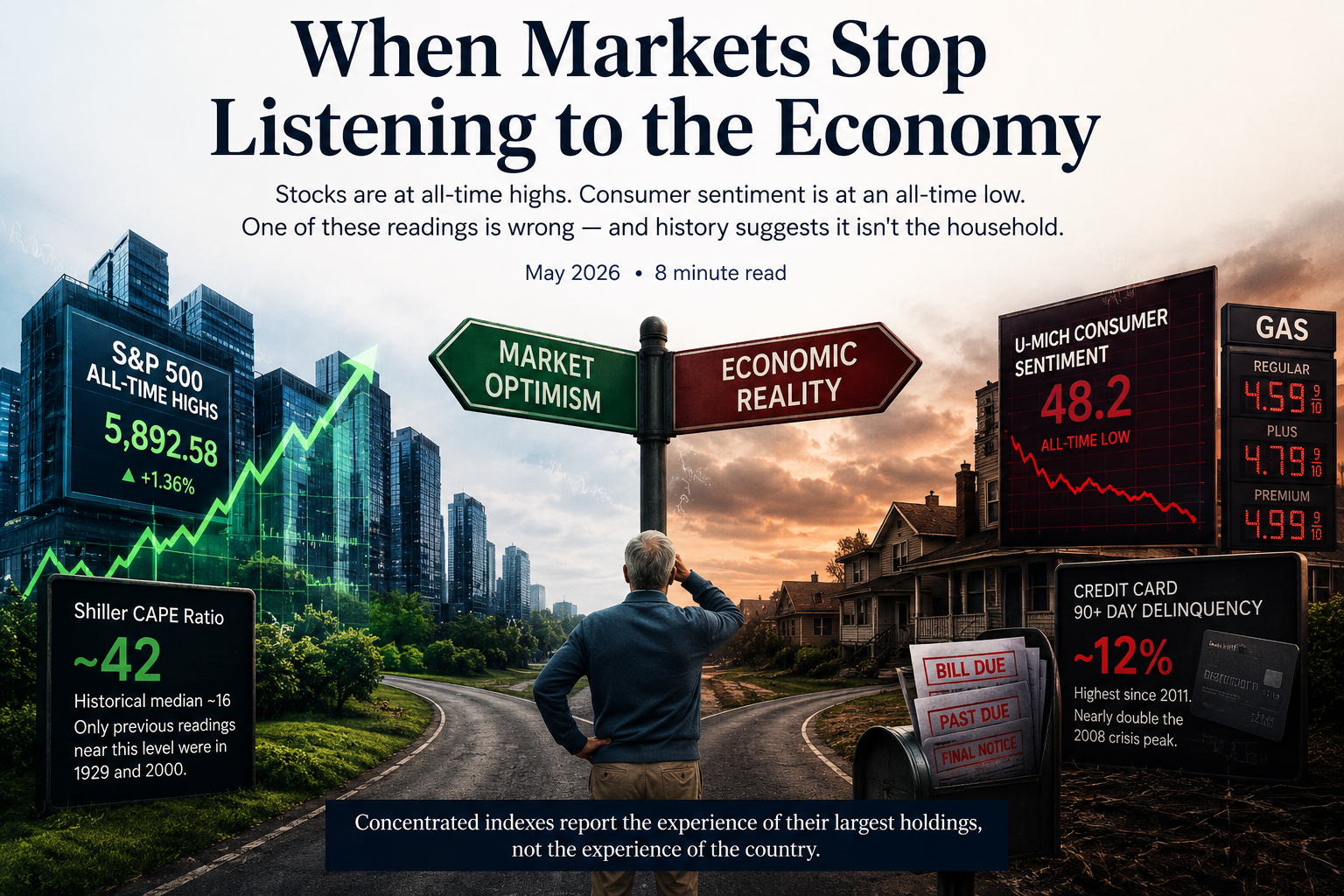
We are living in a period where the financial system depends heavily on confidence, leverage, liquidity, and uninterrupted global flow. Yet many of the underlying supports are under stress. Debt is enormous. Deficits are persistent. Inflation has not disappeared as a structural threat. Markets remain priced for a level of stability that may not match the world we are entering.
A disruption in the Strait of Hormuz does not have to cause a market reset by itself. That is not the point. The point is that when valuations are already stretched, debt is already high, and inflation is already a concern, it may take less than people think to expose the weakness underneath.
Questions investors should be asking now
- What happens if energy prices rise again?
- What happens if inflation stays higher for longer?
- What happens if global shipping remains disrupted?
- What happens if the Fed cannot rescue markets without making inflation worse?
- What happens if my portfolio is built for the last cycle instead of the next one?
This is not about fear. It is about preparation.
A good retirement strategy should not depend on the world remaining calm. It should not depend on markets staying expensive. It should not depend on the Federal Reserve being able to solve every problem. It should not depend on the assumption that geopolitical shocks will remain contained.
The lesson of a blockade is simple: when a narrow passage closes, the effects spread far beyond the passage itself.
That is true in shipping. It is true in energy. It is true in inflation. And it is true in investment portfolios.
At Bailey Financial Services, we believe this is a time for clear thinking, not complacency. Investors do not need to predict every headline. But they do need to recognize when the conditions around them have changed.
The world is more fragile than many portfolios suggest.
The question is not whether every crisis will become catastrophic. The question is whether your retirement assets are prepared for a world where the old assumptions may no longer hold.
Is your portfolio built for the world we are entering?
If you are retired, nearing retirement, or concerned that the next decade may not look like the last decade, now may be the time to stress-test your portfolio against inflation, geopolitical disruption, and market valuations that may not be sustainable.
Start a Conversation