The Federal Reserve, market cycles, gold, concentration risk, and retirement strategy — written for people who want to understand the world as it is, not as we wish it to be.
For years Ray Dalio warned the U.S. was in the “pre-breakdown” phase of his Big Cycle. Earlier this year, he moved his own dial — and the reasoning matters more than the headline.
Inflation is slowing, but prices remain far above where they were a few years ago. One encouraging report does not restore lost purchasing power — or prove the inflation crisis is over.
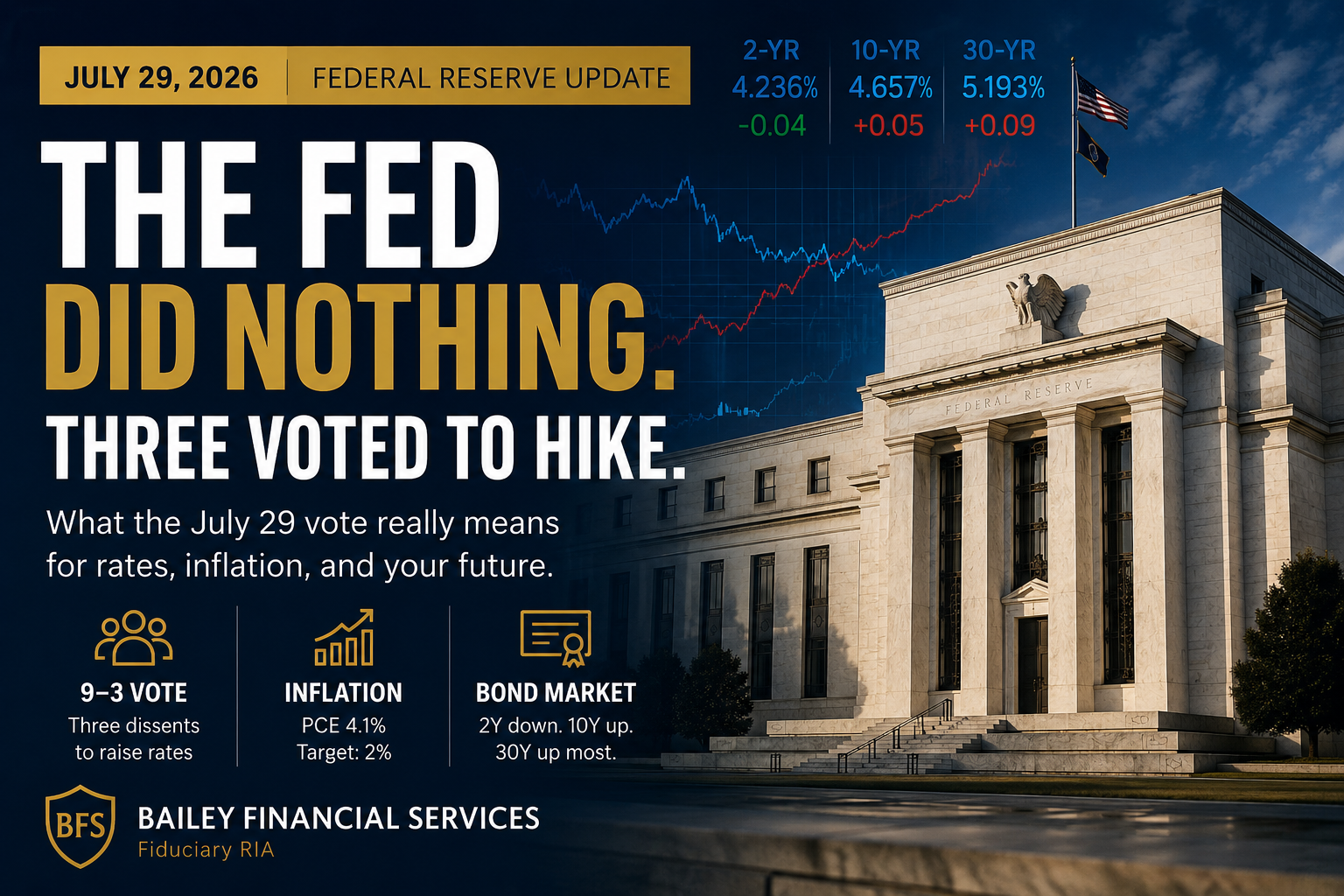
The Federal Reserve is caught between persistent inflation and a weakening economy—and every policy choice carries risk. For retirement investors, the real question is not whether the Fed makes the perfect decision, but whether their plan can withstand the consequences if it does not.
Ray Dalio has moved his Big Cycle marker to Stage 6 — the disorderly finale. The useful question for retirees is not whether he is exactly right, but whether a plan built for calm still holds when the rules become less reliable.
Lower- and middle-income households have experienced a higher effective rate of inflation — and the New York Fed's food-insecurity findings show where the K-shaped economy's stress is actually landing. For anyone on a fixed income, the mechanism is worth planning around.
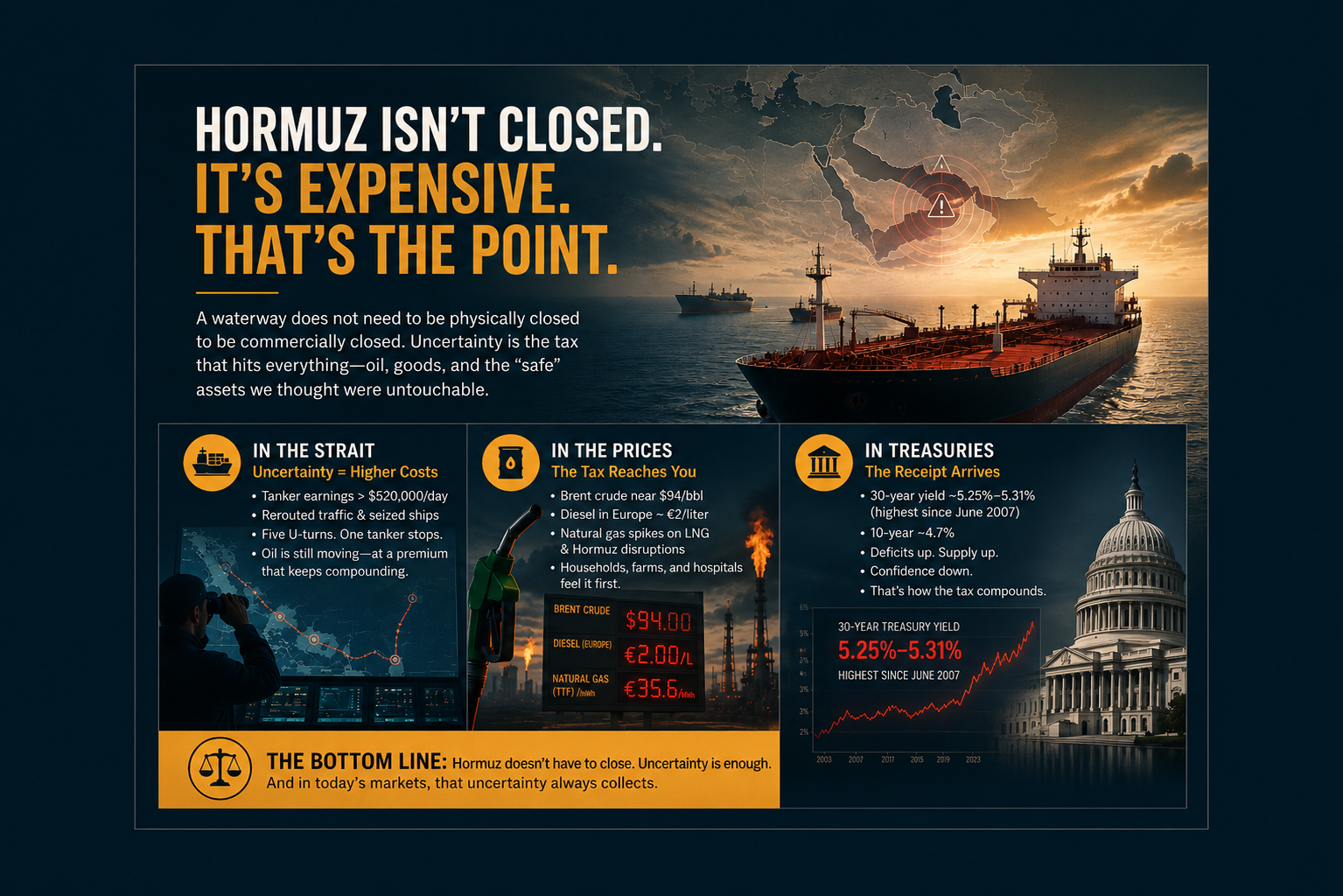
A fifteen-week war shut down the artery that carries a fifth of the world's oil, drained the emergency reserve to a forty-year low, and pushed inflation back above three percent. The vulnerability the episode revealed is worth sitting with — especially for anyone on a fixed income.
The price level has risen roughly 29 percent since the start of 2020 — a permanent ratchet, not a passing rate. For a retiree without a paycheck to follow prices upward, that slow leak is the most persistent threat a plan faces.
The market is setting new highs while consumer sentiment sits at a 74-year low — and Buffett, Dalio, and Rogers are all quietly playing defense. When investors of that caliber reach the same defensive posture through different lenses, the honest question is what they see that the crowd does not.
The S&P 500 is setting record highs while consumer sentiment sits at the lowest reading in survey history. Both signals are real — and they cannot both stay true forever. Markets that disconnect from the underlying economy historically reconnect, usually downward and faster than expected.