There Is No Such Thing as an “Affordability President”
Why Claims of “More Affordable” Are Missing the Root Cause
In December 2025, a piece published on LewRockwell.com critiques claims by political leaders — specifically President Trump — that he is making the U.S. economy more “affordable.” The article argues that no president can truly deliver affordability while underlying economic drivers remain untreated. Rather than superficial messaging, the author urges a deeper look at monetary conditions and government spending as the real determinants of purchasing power.
The Story Behind the Slogan
The article begins by noting that President Trump has positioned himself as the nation’s “affordability president,” suggesting that recent economic performance has improved everyday living costs. This includes public remarks praising the economy and an uptick in messaging around lower prices and stronger paychecks. However, the author challenges this narrative as a political framing that does not match the lived experience of many Americans.
Real Costs vs. Rhetoric
To illustrate the point, the piece highlights examples like grocery prices — ground beef, milk, and even simple items like cookies — that have actually risen in price even in the period since this administration took office. These data points reflect tangible cost pressures that consumers feel, and they counter the notion that inflation has eased to the point of restoring broad affordability.
Though not unique to this publication, related commentary in the broader media notes that the word “affordability” lacks a clear technical definition and can be wielded rhetorically. Some presidential allies have dismissed cost concerns as politically motivated, even a “con job,” while critics use everyday price data to refute that interpretation.
Policy Measures That Don’t Fix Fundamentals
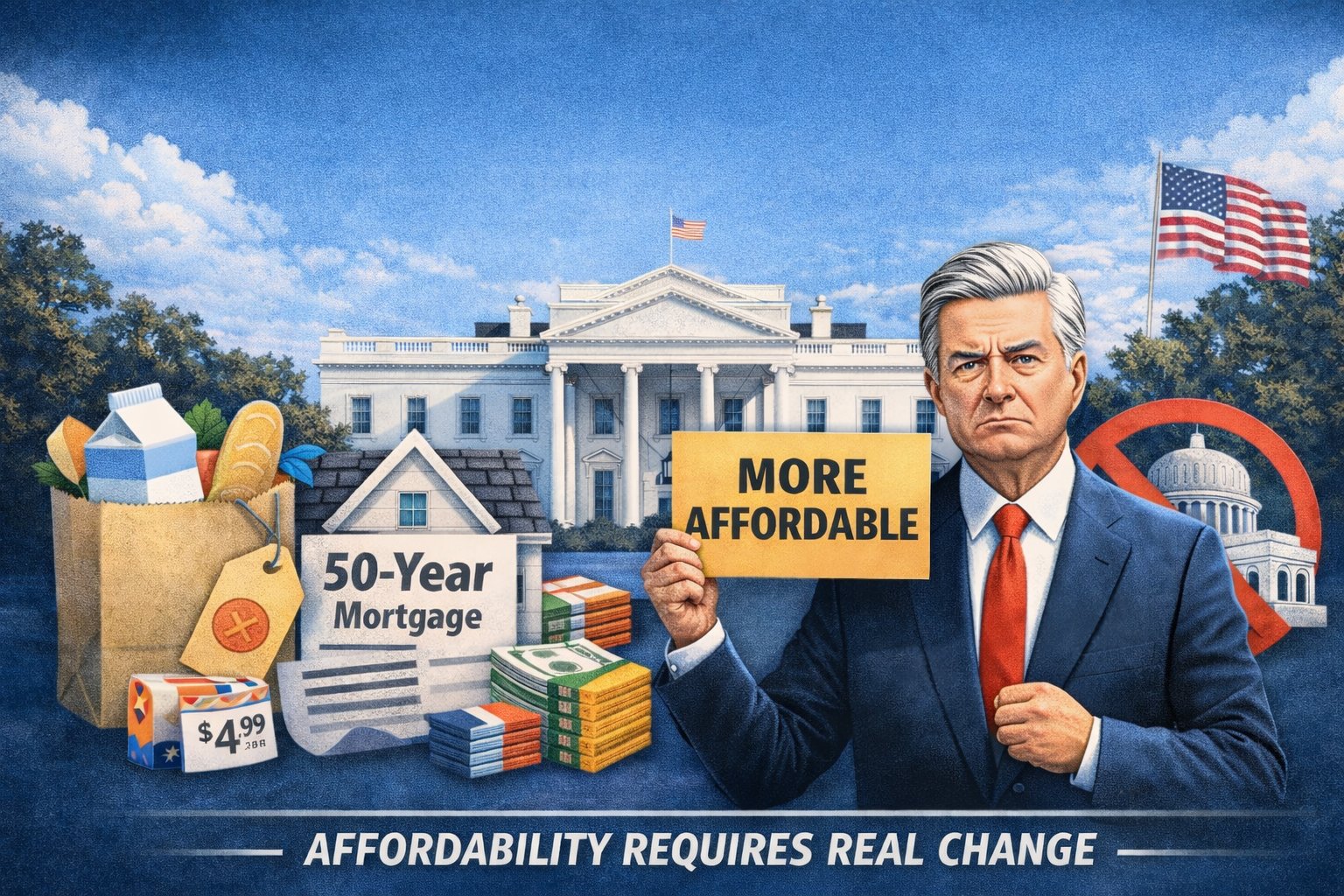
The article identifies several policies being touted as affordability measures — such as promoting 50-year mortgages — but argues these may actually worsen the long-term affordability problem. For example:
Longer-term mortgages reduce monthly payments on paper but can increase total debt service and push up home prices.
Tariffs may serve geopolitical purposes but generally act as price increases passed to consumers.
These examples underline the difference between policy appearance and actual economic outcomes.
The Real Culprit: Monetary Expansion and Government Spending
At the center of the critique is the claim that persistent inflation and unaffordability are not cyclical political phenomena, but structural ones tied to:
Excessive government spending
Federal deficits financed by monetary expansion
The piece explains that when governments spend far more than they collect in revenue, they make up the difference through debt and often by expanding the money supply. This form of monetary inflation — increasing the amount of money chasing goods — translates into higher prices across the economy.
This point echoes longstanding Austrian economics perspectives, which view inflation as fundamentally a monetary phenomenon, not merely a price statistic. Under this view, even declining rates of inflation do not equate to falling prices — they simply represent slower growth in prices compared with previous periods.
Why Presidents Can’t “Fix” Affordability
The core argument is that without addressing the root causes of inflation — namely, fiat money and fiscal imbalance — a political leader cannot meaningfully improve affordability. Any short-term tweaks or optics fail to reverse broad price trends. In other words:
Prices are up because the supply of money has been inflated relative to real goods and services.
Government actions that drive deficits and credit expansion worsen this dynamic.
Therefore, the article concludes, no president operating within the existing monetary framework can truly deliver affordability.
Alternatives and Broader Implications
Toward the end, the article suggests looking beyond conventional policy to systemic changes, such as monetary reforms. While controversial — including proposals like adopting alternative money standards — these are presented as frameworks that could limit governments’ ability to inflate money and erode purchasing power.